
A New Era Is Upon Us: Biggest Takeaways from Candy’s Team X Space

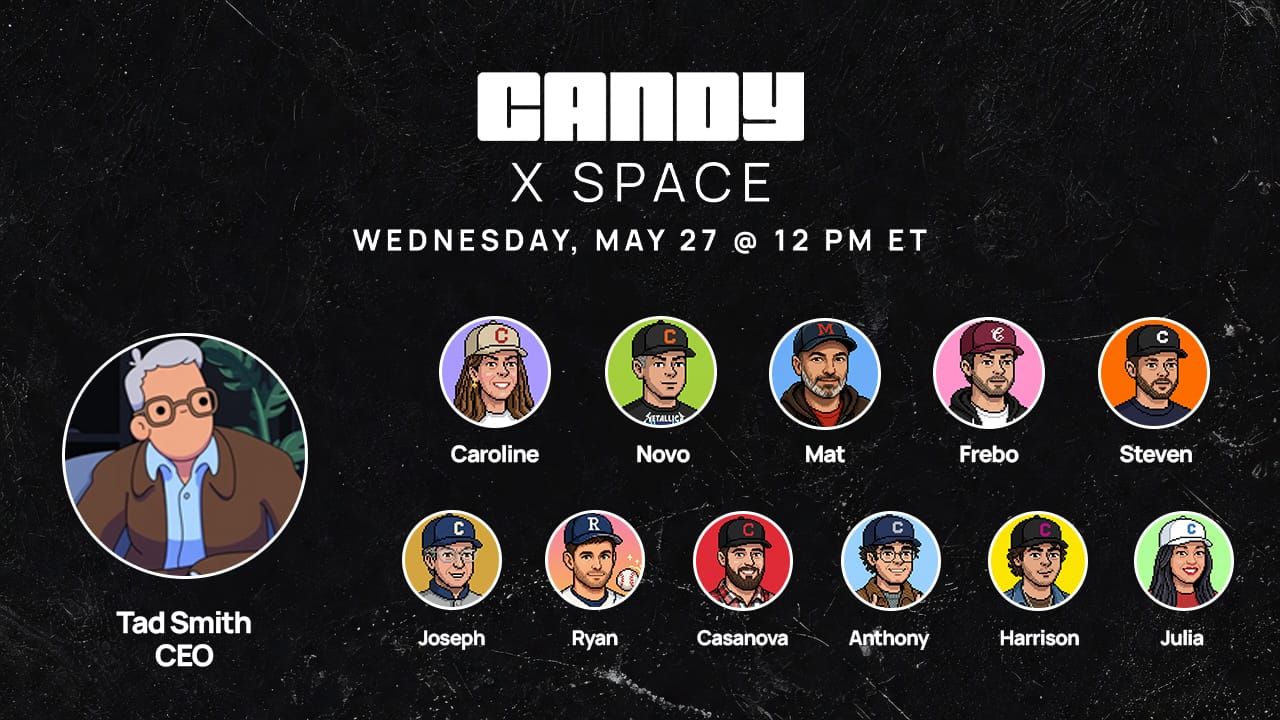
Candy Digital is entering a new era, and the recent Candy Team X Space gave fans a first real look at what that means.
The conversation brought together the Candy team to talk through where the platform stands today, what is being rebuilt behind the scenes, and how the company is approaching the future of digital collectibles across MLB, DC Comics, and beyond. The Space covered a lot of ground, including new ownership, community feedback, the move to Solana, self-custody, permanent storage, the recent burn window, secondary market strategy, digital art, and what fans can expect in the weeks and months ahead.
More than anything, the conversation made one thing clear: Candy is moving forward with a renewed focus on fans, collectors, and the long-term health of the platform.
This next chapter is not about flipping a switch and pretending the past few years did not happen. It is about acknowledging where the platform has been, listening to the collectors who stayed engaged, and building a stronger foundation for what comes next.
A New Chapter Built Around Fans
The strongest theme throughout the Space was that Candy’s next chapter is being shaped around fan feedback.
The team made it clear that the community has been heard across X, Discord, email, and direct conversations. Collectors have asked hard questions, shared concerns, pushed for clarity, and continued to show up even during uncertain moments for the platform. That continued engagement is now helping guide the way Candy communicates, prioritizes updates, and builds for the future.
That matters because Candy has always been at its best when the fan and collector communities are active participants in the experience. MLB collectors, DC fans, Bat Cowl holders, DC3 collectors, and longtime Candy users have all played a role in keeping the brand alive. The next era of Candy has to reflect that energy by creating a clearer, more responsive relationship between the platform and the people who collect on it.
The goal is not simply to bring the platform back online. The goal is to create an experience fans are proud to be part of again, with clearer communication, stronger ownership, and more thoughtful collecting mechanics.
Why Candy Still Matters
The Space also reinforced why Candy still has a meaningful role to play in digital collectibles.
The broader NFT market has changed dramatically since Candy first launched. The initial wave of hype has cooled, collectors have become more selective, and the industry has had to confront real questions around supply, liquidity, ownership, and long-term value. But the core idea behind Candy remains strong: fans want meaningful ways to collect the sports moments, characters, stories, and artwork they care about.
That is not a crypto-only idea. It is a collecting idea.
Fans already understand why a baseball card matters. They understand why a comic matters. They understand why a rare piece of memorabilia, a signed jersey, or a limited-edition artwork can carry value beyond the object itself. The value comes from the connection to the moment, the scarcity of the item, the story behind it, and the community around it.
Digital collectibles can tap into those same instincts, but only if the infrastructure and experience are built the right way. That is the opportunity Candy is now focused on: making digital collecting feel more secure, more intentional, more flexible, and more aligned with what collectors actually want.
Rebuilding Trust Through Clearer Communication
Trust was one of the most important topics of the Space.
Candy fans have been through a lot. The platform went quiet for a period of time, and when communication slows down, uncertainty naturally fills the gap. Collectors want to know what is happening with their assets, what the roadmap looks like, and whether the platform is going to follow through on what it says.
The team acknowledged that directly. The new approach is centered on more consistent communication across the channels fans already use, including blog posts, X updates, X Spaces, Discord, email, and direct community engagement.
That does not mean every answer will be available immediately. Some details still depend on technical work, partner conversations, legal approvals, and rollout timing. But the commitment is to share what can be shared when it can be shared, and to be clear when things change.
For Candy, rebuilding trust is not about one big announcement. It is about a steady pattern of communication and follow-through. Fans need to see the platform say what it is going to do, do the work, and keep the community updated along the way.
The Move to Solana
[Embed Tweet: Candy Collectibles Are Moving to Solana]
A major focus of the Space was Candy’s migration to @solana using @metaplex Core.
This move is one of the most important pieces of Candy’s next chapter because it addresses several of the biggest challenges in digital collectibles: self-custody, royalty enforcement, security, speed, transaction costs, and access to broader secondary market liquidity.
For collectors, the move to self-custody is especially important. Candy assets are moving toward a structure where fans can hold their collectibles in their own wallets rather than only inside a closed platform. That gives collectors more control and creates a clearer sense of ownership.
For licensors and creators, royalty enforcement is also a key part of the decision. Licensed digital collectibles need a structure that protects the IP behind the assets and supports royalties when items trade in secondary markets. Without that, it becomes much harder to build a sustainable model for major brands, leagues, artists, and rights holders.
For the broader ecosystem, Solana offers speed, scale, and an active marketplace environment. That matters because digital collectibles need more than a place to exist. They need a market where collectors can buy, sell, trade, discover value, and feel confident that the asset has a life beyond the original drop.
The move to Solana is not just a technical migration. It is part of Candy’s effort to give its collectibles a stronger home.
Permanent Storage for Long-Term Collecting
The team also shared important details around how Candy is approaching storage.
Candy is using Arweave for permanent decentralized file storage, including images, videos, metadata, and other collectible files. This is a major part of making digital collectibles more durable over time.
For collectors, this detail matters. A digital collectible should not depend entirely on one storefront or one centralized platform staying online forever. If the collectible media, metadata, or files are not properly preserved, the long-term collecting experience becomes fragile.
That is especially important for sports highlights, artwork, and digital comics. These are not just tokens. They are visual, media-rich collectibles that fans want to revisit, display, and preserve. The underlying files need to be treated with the same seriousness as the collectible itself.
By using permanent decentralized storage, Candy is working to make sure its assets are better equipped for long-term ownership. That is an important step toward making digital collectibles feel more like true collectibles, not temporary platform content.
What Active Fans Can Expect
The Space also provided useful clarity for active fans as migration moves forward.
Eligible active fans will have their assets migrated with the technical services fees covered by Candy, including the applicable minting and storage fees tied to the migration process. That means active fans will not be charged for the migration of eligible assets or the permanent storage being handled as part of the process.
Fans will also receive access to a wallet connected to their migrated assets. Once live, this gives collectors the ability to take custody of their assets and interact with them in a more open ecosystem.
This is a meaningful shift from the previous model. For years, many digital collectibles across the industry were tied closely to specific platforms. Candy’s next phase is designed to give fans more direct ownership and more flexibility.
That is one of the clearest ways the platform is putting collector interests at the center of the rebuild.
[Embed Tweet: Candy Update: Account Reactivation and Inactive Accounts]
The Burn Window Was Just the Beginning
[Embed Tweet: Free Migration Support and Burn Windows Closed]
The recent burn window was another major topic.
During the Space, the team shared that more than 100,000 collectibles were burned. That is a significant number, but the bigger takeaway is what it represents for Candy’s future collector economy.
Supply control is becoming a major priority.
The digital collectibles market has learned that supply matters. When too many items enter the market without enough demand or utility around them, scarcity weakens and secondary markets can suffer. Collectors want to feel like the items they own have a reason to matter over time.
Burning gives Candy a way to help address that. It can reduce supply, create new forms of engagement, reward active collectors, and support future mechanics tied to credits, challenges, auctions, raffles, and other collecting experiences.
The burn window was not just a cleanup exercise. It was an early signal of how Candy is thinking about the next version of its collector economy: more active, more strategic, and more focused on long-term market health.
The Diamond Economy
One of the most interesting ideas discussed during the Space was the broader “diamond economy.”
While full details are still to come, the high-level direction is focused on giving fans more ways to participate with their collections while helping improve the secondary market. That could include burning for credits, burn-based challenges, raffles, auctions, Dutch auctions, and different levels of collector participation.
The important part is that these mechanics are not just being added for the sake of activity. They are being designed around a larger goal: creating more scarcity, supporting secondary market activity, and giving collectors more meaningful decisions to make.
A stronger collector economy cannot depend only on primary drops. It needs reasons for fans to engage after the initial sale. It needs ways for collectors to use their collections, make choices, chase new rewards, and feel like participation matters.
The diamond economy is still taking shape, but the early framing points to a more interactive and strategic version of Candy collecting.
MLB Is Moving First
MLB remains one of Candy’s strongest foundations, and the Space made clear that baseball is currently the most developed part of the upcoming product roadmap.
That makes sense. Baseball has always been central to Candy’s identity, and the MLB season gives the platform a natural rhythm for product releases, collecting moments, and fan engagement. Rookie debuts, milestone achievements, signature plays, and season-defining highlights all fit naturally into the digital collectible format.
The next phase of MLB collectibles is being built around the same ideas discussed throughout the Space: stronger supply discipline, better collector mechanics, more engaging burns, credits, auctions, and a renewed focus on making the secondary market healthier.
The team also teased that designs are in progress and that more details are expected in June. For MLB collectors, this is the first major category where Candy’s new approach can come to life in a visible way.
Baseball gives Candy a chance to show how the next era works, not just explain it.
DC Collectors Remain an Important Part of the Conversation
DC Comics and the Bat Cowl community were also addressed during the Space, and the message was clear: Candy recognizes how passionate and engaged this collector base continues to be.
From Bat Cowls to DC3, the DC community has remained one of the most vocal and committed parts of the Candy ecosystem. That energy has not gone unnoticed. The team understands how much these collectibles mean to fans and how important it is to provide clarity around existing assets, preservation, and the overall collector experience.
While MLB is moving first in the near term, Candy is continuing to work through the right path for DC-related collectibles and existing collector experiences. The timing may look different from MLB, but the immediate focus remains on communication, asset preservation, and making sure collectors understand what is happening as the platform moves into its next phase.
For DC collectors, the takeaway is that the community has been heard and remains part of the broader Candy conversation. As more details become available, Candy will continue to share updates with the same focus on transparency and follow-through.
DC3 Comics and Full Comic Storage
One of the most important DC-specific clarifications came near the end of the Space.
For DC3 digital comics, every page of every comic is being uploaded to Arweave permanent decentralized storage. That means the preservation plan is not limited to cover art or surface-level metadata. The full comic data is being stored and connected to the collectible.
That is a meaningful update for DC3 collectors because it addresses a core question around digital comic ownership. If a fan owns a digital comic collectible, they should have confidence that the comic itself is being preserved, not just a token that points to an incomplete asset.
The team also explained that the files will be stored in a way that can support human-readable access and comic reader compatibility through an archive format. While the user experience will continue to evolve, the underlying direction is clear: Candy is treating the full comic as part of the collectible.
For long-term collectors, that matters.
Digital Art Is on the Radar
The Space also touched on digital art as a future opportunity.
Candy’s immediate focus remains on MLB, DC-related collectibles, migration, and the platform relaunch. That focus is important because the platform is in a rebuild phase and needs to execute well on its core priorities first.
At the same time, there is real interest in the role Candy could play in digital art, especially for talented artists who have not yet found commercial success. The broader idea is that Candy could potentially help connect artists with collectors and create new ways for fans to discover meaningful work.
The team was careful not to frame digital art as an immediate product announcement. Instead, it was discussed as an area of interest that would need to make sense from a business, platform, and fan experience perspective.
That is the right approach. Digital art could become a powerful extension of Candy’s collecting universe, but only if it adds value without distracting from the immediate work underway.
The Road Ahead
The Candy Team X Space was not designed to answer every question. It was meant to reopen the conversation, give fans a clearer look at what is happening, and show how the company is thinking about the road ahead.
The key priorities are becoming clear: more consistent communication, more fan feedback, self-custody, permanent storage, better supply discipline, stronger secondary market activity, and more engaging ways to collect.
There is still a lot of work ahead. Migration needs to continue. The platform relaunch needs to land. MLB plans need to be shared in more detail. DC-related updates will need the right timing and context. The diamond economy needs to be fully explained. Fans will continue to have questions, and those questions deserve clear answers.
But the direction is different now.
Candy is listening more closely, communicating more openly, and building toward a collector experience that is designed to last.
A new era is upon us, and this is only the beginning.